Money page: attic performance
Attic Insulation in Yuma, AZ — Turn a 160° Attic Into a Livable One
Yuma attics commonly reach 140-160°F on summer afternoons, and unlike almost anywhere else in the state, that heat load doesn't let up for months at a time. The right attic insulation strategy stops treating your attic like a problem to tolerate and starts treating it like part of the building envelope.
The Yuma attic problem
Your attic isn't just hot in August. It's hot for most of the year.
Yuma sits at the lowest elevation of any market in Arizona — roughly 70 to 140 feet above sea level — and gets fewer monsoon-storm interruptions than Phoenix. The practical result is that Yuma frequently logs more consecutive 100°F+ days per year than Phoenix, even on a summer where Phoenix records a hotter single peak day. Add in one of the highest sun-exposure rates anywhere in the country, and an unconditioned Yuma attic isn't dealing with a few brutal weeks — it's absorbing intense solar heat gain across a stretch that runs from late spring well into fall.
That matters because most Yuma homes are single-story with ductwork and an air handler routed through the attic. Every degree that attic runs above outdoor temperature is a degree your ductwork and air handler are absorbing before your air conditioner even starts fighting the heat coming through the walls and windows. A 150°F attic isn't a minor inefficiency — it's actively working against the equipment you're paying to run.
Yuma's climate is officially IECC Zone 2B — the same numeric zone as Phoenix — but the framing that matters for attic work here is different in one specific way: this is almost entirely a cooling-load problem. January highs average around 70°F and lows rarely dip near freezing, so unlike a genuinely four-season climate, there's no winter heating season pulling double duty against the summer numbers. Every dollar spent on attic insulation in Yuma goes almost exclusively toward beating back heat, which changes where that dollar goes furthest.
It also means the standard national attic-insulation talking points undersell the problem here. A generic "add more insulation" recommendation written for a four-season climate doesn't account for an attic that spends most of the year at or above 140°F — which is the gap this page is written to close.
Two strategies, one goal
Sealed roof-deck foam vs. air-seal and blow-in
There are two legitimate ways to fix a Yuma attic, and the right one depends on what's actually up there — mainly, whether your ductwork lives in the attic or not.
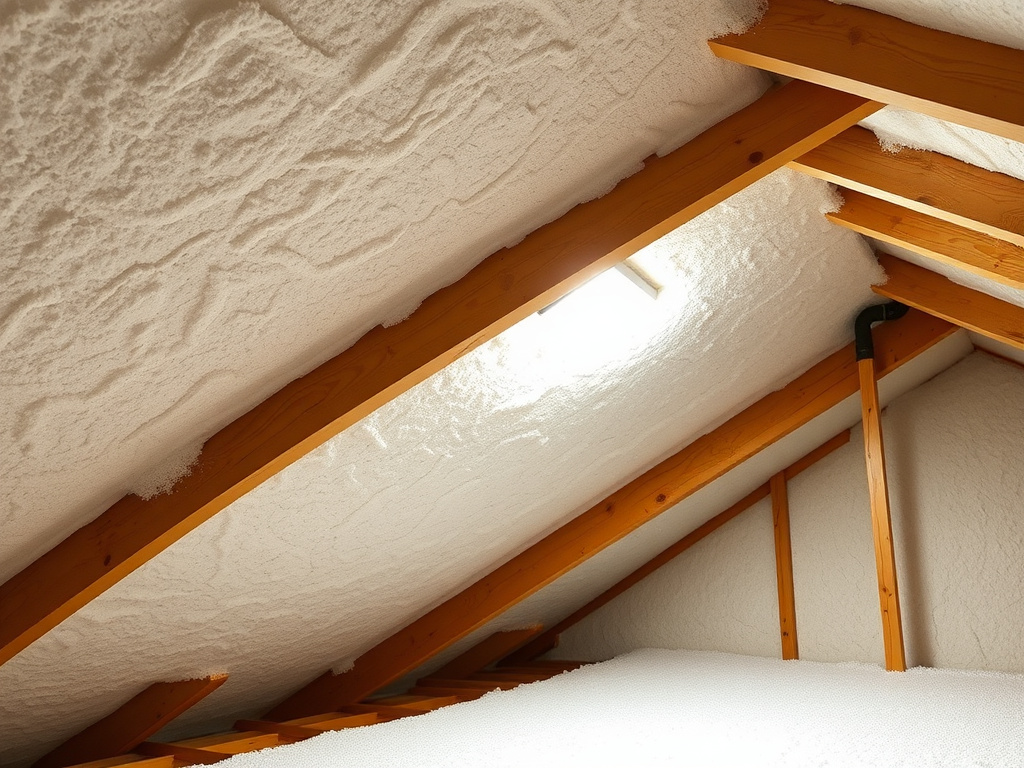
| Sealed / unvented roof deck | Spray foam is applied directly to the underside of the roof deck, moving the entire attic inside the home's thermal boundary. The attic stops behaving like an oven and starts behaving like a mechanical space that happens to be warm, not scorching. |
|---|---|
| Conventional air-seal + blow-in | The ceiling plane (the ductwork's attic floor) is air-sealed at every penetration, then topped with blown-in fiberglass or cellulose to a target depth. The attic itself stays vented and hot; the goal is stopping heat from moving down into the living space below. |
| Best fit — sealed roof deck | Homes with ductwork, air handlers, or mechanical equipment routed through the attic — the typical Yuma single-story layout — where taking the whole space out of the extreme-heat equation protects the ducts themselves, not just the ceiling below. |
| Best fit — air-seal + blow-in | Homes with no attic ductwork, a simpler renovation budget, or an attic used for storage where full encapsulation isn't the priority. |
| Attic temperature after install | Sealed roof deck: attic tracks much closer to indoor conditions year-round. Air-seal + blow-in: attic still runs hot on summer afternoons, but less of that heat reaches the ceiling and ducts below. |
Both strategies can meet current code targets. The difference is what happens to the attic itself, and to any equipment routed through it.
In Yuma's common single-story layout, ductwork and the air handler are usually in the attic, which is exactly the scenario where a sealed, unvented roof deck earns its keep. Foaming the underside of the roof deck moves the whole attic inside the conditioned building envelope, so the ducts and equipment sitting in it are no longer baking in triple-digit attic temperatures for half the year. Where a home has no attic mechanical equipment — say, an attic that's genuinely just storage space — a well air-sealed ceiling plane topped with blown-in fiberglass or cellulose to a proper depth is a legitimate, lower-cost path to the same code target. We'll tell you plainly which one fits your house rather than defaulting to the higher-cost option.
R-value targets
What R-value should a Yuma attic actually hit?
- ✓R-38 — the 2018 IECC-derived floor for Zone 2B ceilings and attics, the minimum most Yuma homes should be built or upgraded to.
- ✓R-49 — the 2021-code-aligned target we recommend for new attic work in 2026, given how long and sustained Yuma's cooling season runs compared to almost anywhere else in the state.
- ✓R-13 cavity minimum for walls — the same prescriptive band as Phoenix, since both sit in Zone 2B, though the attic is where Yuma homes see the biggest return on going past the code floor.
- ✓Existing insulation at R-7 or less is the threshold that qualifies a home for the APS Home Performance rebate discussed below.
R-value isn't the whole story with spray foam, though. A blown-in or batt product only delivers its rated R-value if it's installed at full, even depth with no compression and no gaps at penetrations — a common failure point in older Yuma attics where insulation has settled, been disturbed by pest activity, or was never installed to full depth in the first place. Spray foam doesn't settle the same way, and a sealed roof deck adds an air-sealing function that a resistance-only R-value number doesn't capture: it stops hot attic air from moving through gaps and penetrations, which matters as much as the insulation's raw thermal resistance in a climate this hot.
That's part of why we measure your existing insulation depth and condition during the inspection rather than quoting off a square-footage estimate alone. A home that already has R-19 of settled fiberglass needs a different plan than one starting from bare roof deck.
Cost — directional ranges
What attic insulation typically runs in Yuma
Every attic job is priced off the actual square footage, roof-deck geometry, current insulation condition, and access — so treat the numbers below as a starting point for a conversation, not a quote. For a typical 1,500-2,200 square foot Yuma home, a full attic roof-deck spray foam job commonly lands somewhere in the neighborhood of $2,250 to $5,000 installed, with most contractors — us included — carrying a minimum job charge in the range of $1,500 to $2,200 to cover mobilization and equipment setup regardless of size. Air-seal-and-blow-in work is typically priced lower per square foot than sealed roof-deck foam, since it uses a lower-cost material and a simpler install process, but it also doesn't deliver the same equipment-protection benefit for attics with ductwork in them.
Removal of old, settled, or contaminated insulation before a new install — common in older central Yuma and Somerton housing stock — is priced separately; see our insulation removal page for that range. The clearest way to get an accurate number for your specific attic is a free inspection, where we measure the actual roof-deck area, note current insulation depth, and flag anything — pest activity, duct condition, access constraints — that would move the number up or down before we put a figure in front of you.
Rebates that actually apply here
Walking through the APS attic-insulation rebate
Yuma is single-utility APS territory — there's no SRP presence here the way there is in Phoenix — which makes the rebate conversation simpler than in a split-territory market. Here's how the APS Home Performance path works for an attic job, step by step.
Confirm current R-value
During your inspection, we measure your existing attic insulation depth and estimate its current R-value. The rebate path applies to attics currently at R-7 or less.
Bring it to R-43
The rebate is structured around bringing that R-7-or-less attic up to a minimum of R-43 — above both the R-38 code floor and in line with the R-49 target we recommend for a genuinely comprehensive job.
Confirm program terms
Rebate programs change from year to year. We'll flag the current APS Home Performance terms at the time of your quote and confirm eligibility before work is scheduled — worth double-checking directly with APS as well.
File the paperwork
Up to $250 is available through this path when the work qualifies. We'll walk you through what's needed on our end so nothing holds up the reimbursement after install.
If your household qualifies by income, the Western Arizona Council of Governments (WACOG) Weatherization Assistance Program serves La Paz, Mohave, and Yuma counties and can cover attic insulation and air sealing at no direct cost to eligible homeowners and renters (with landlord permission). WACOG's Yuma office is at 1235 S. Redondo Center Dr., (928) 782-1886, and is worth a call before you commit to a paid install if you think you might qualify.
One thing we'll say plainly rather than let you assume: the federal Energy Efficient Home Improvement Credit — the 25C tax credit some homeowners used for insulation work in past years — ended for installs completed after December 31, 2025, under the One Big Beautiful Bill Act. It is not available for 2026 attic projects. The APS rebate and the WACOG program above are the real, current paths worth pursuing.
What changes for your AC — and your roof
Equipment runtime, monsoon season, and the shingle-warranty question
Once the attic stops dumping 140-160°F heat into your ductwork and ceiling plane, the most immediate change most homeowners notice is how often the air conditioner actually runs. Shorter, less frequent cooling cycles are the expected result of sealing off that heat source, and they show up directly on a summer utility bill. If your air conditioner is nearing the end of its service life, a properly sealed attic is also worth factoring into the replacement conversation — a unit sized for a leaky, superheated attic is often oversized for a sealed one, and your installer should account for that when it's time to replace equipment rather than defaulting to a like-for-like swap.
We hear the shingle-warranty question often enough that it's worth addressing directly: adding spray foam to the underside of your roof deck from inside the attic does not void a manufacturer roofing warranty. The confusion usually traces back to a different install method — exterior foam applied to the outside of the roof deck — which changes shingle temperature behavior in a way interior attic-side foam does not. We'll confirm your specific roof system before any work starts.
Monsoon season brings a second, more practical consideration: Yuma sees real summer humidity spikes during storm activity even though the rest of the year runs bone-dry, and every attic job we do accounts for how dust and blowing sand — a near-constant reality in this part of the county — interact with the insulation assembly. A sealed roof deck holds up well against airborne dust because it's a continuous, adhered surface rather than a loose fill material that can shift or settle around penetrations over time. Blown-in insulation needs periodic checking after major dust events or roof access work, since loose fill can get disturbed in ways a foam assembly doesn't.
If your attic still has original vents from a prior conventional setup and you're moving to a sealed, unvented design, we detail those transitions properly rather than leaving a half-converted attic that isn't fully one system or the other, built to the IRC R806.5 code path as a complete assembly.
Common questions
Attic insulation FAQ
Is sealed roof-deck foam always better than air-sealing and blowing in insulation?
+
Not automatically — it's the better fit for the specific problem it solves. If your ductwork and air handler sit in the attic, which is common in Yuma's single-story housing stock, sealing the roof deck keeps that equipment out of 140-160 degree afternoon heat instead of just slowing heat transfer through the ceiling. If your attic is unused storage space with no mechanical equipment in it, a properly air-sealed ceiling plane topped with blown-in insulation to R-38 or R-49 can be the more budget-appropriate option. We walk the attic before recommending either one.
Will spray foam void my shingle warranty?
+
Manufacturer roofing warranties are tied to the shingle and underlayment products and how they were installed — they aren't voided by insulation added to the underside of the roof deck from inside the attic. The concern some homeowners have heard about usually involves exterior roof-deck foam applications changing shingle temperature behavior, which is a different install method than the interior attic-side spray foam most Yuma homes use. We'll walk through your specific roof system before work starts so there's no ambiguity.
Do I still need attic ventilation after spray foam?
+
It depends on the strategy. A sealed, unvented roof deck is designed to work without traditional soffit-to-ridge attic ventilation — the foam itself is the air and thermal barrier, and the code path for unvented attic assemblies (IRC R806.5) accounts for this. If you go the conventional air-seal-and-blow-in route instead, the attic stays vented as designed and that ventilation keeps doing its job. We size and detail whichever approach we install so it meets code as a complete assembly, not a partial one.
How is the APS rebate actually applied to an attic insulation job?
+
The APS Home Performance rebate path pays up to $250 toward bringing existing attic insulation with an R-value of R-7 or less up to a minimum of R-43. During your inspection we check your current insulation depth and R-value, confirm whether your attic qualifies, and walk you through the paperwork if it does. It's worth confirming current program terms with APS directly before your install is scheduled, since rebate programs can change.
Get a free attic inspection, with photos
We measure your actual roof-deck area, check your current insulation depth, and tell you plainly whether a sealed roof deck or air-seal-and-blow-in is the right fit for your house — before we ever talk numbers.
Go deeper
Related reading
Energy Audits
Not sure your attic is actually the biggest source of heat gain in your home? A thermal-imaging and blower-door audit tells you before you spend a dollar on insulation.
2026 Cost & Extreme-Heat Climate Guide
Full cost tables by project type, the Zone 2B climate breakdown, and every current rebate program in one place.