Removal & replacement
Attic Insulation Removal & Replacement — Yuma & Yuma County
Some attics don't need more insulation — they need the old insulation out before anything new can do its job. Pest contamination, matted-down fill, smoke or water damage, and pre-foam prep are the situations where removal comes first.
When removal is actually necessary
Four situations where you remove before you add
Not every attic insulation upgrade needs a removal step first — plenty of clean, dry, properly-lofted insulation can simply be topped off or built around. But four situations come up often enough in Yuma and Yuma County that they're worth calling out specifically, and each one is a case where adding new material over the old problem just buries it under a fresh layer instead of solving it.
| Rodent / pest contamination | Common in older central Yuma and Somerton housing stock and in farm-and-ranch-adjacent properties, where field mice, packrats, and other pests find their way into attic spaces through roof and eave gaps. |
|---|---|
| Matted or aged insulation | Loose-fill insulation compresses and settles over years, losing much of its rated R-value long before it looks obviously damaged — a common finding in homes that haven't touched their attic insulation since the original build. |
| Smoke or water damage | Insulation that's absorbed smoke odor from a fire, or moisture from a past roof or plumbing leak, holds onto both in ways that surface cleaning doesn't fix — it needs to come out. |
| Pre-foam prep | Converting from an old vented, blown-in setup to a sealed spray foam roof deck starts with a clean substrate — old material has to be cleared before foam can be applied properly. |
If you're not sure which situation applies to your attic, a free inspection settles it before any work is scheduled.
Older housing stock in central Yuma and Somerton, along with farm and ranch outbuildings throughout the county, tend to see the pest-contamination scenario most often — roof and eave gaps that developed over decades give field mice, packrats, and other desert wildlife a way in, and once insulation is contaminated, it's a health issue, not just a performance issue. Manufactured and park-model homes, common across Yuma's large winter-visitor population, have their own version of this problem in underbelly insulation, which is worth a separate look if you own or manage a manufactured home.
Our process
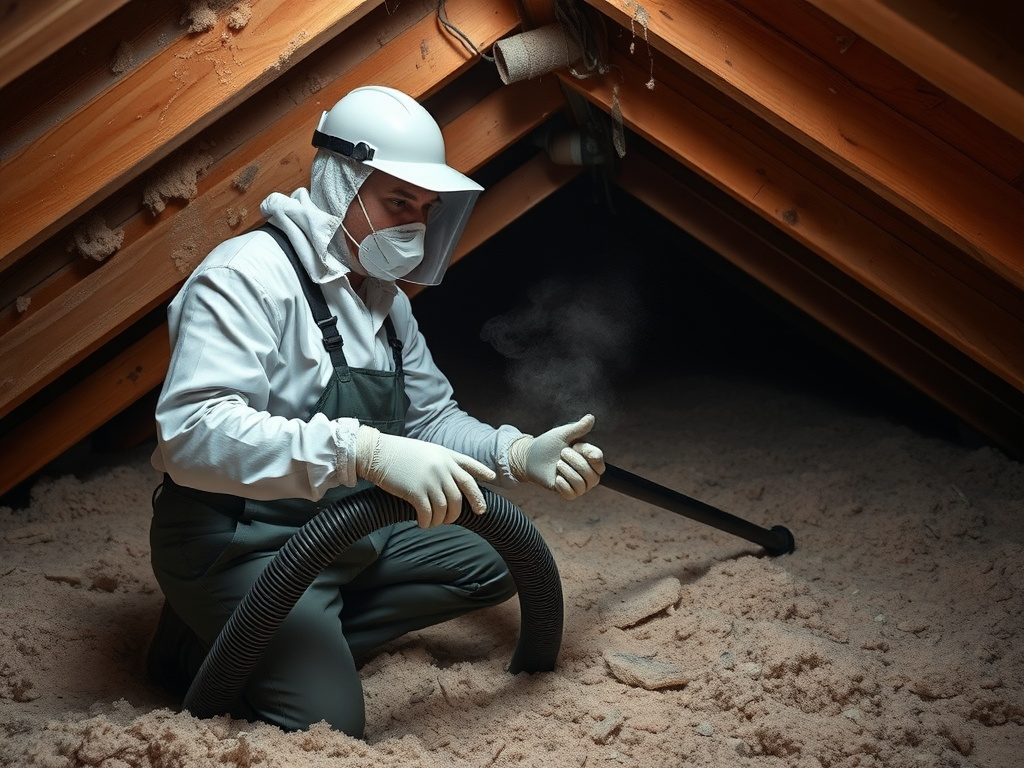
HEPA extraction, bag-out, sanitize, seal, re-insulate
Removal isn't just pulling material out of the attic — done properly, it's a five-step process that keeps contaminants contained and leaves the space actually ready for new insulation, not just emptied out.
HEPA-filtered extraction
Old insulation is removed with HEPA-filtered vacuum equipment designed to capture fine particulates and contaminants rather than stirring them into the air you and your family breathe.
Bag-out at the source
Contaminated material is bagged and sealed at the point of removal, not carried loose through the house, so nothing tracks through living space on the way out.
Sanitize the space
The attic deck, framing, and any affected surfaces are treated to address pest residue, odor, and contamination before anything new goes in.
Seal entry points
Gaps, gnaw points, and other pest-entry paths we find during removal are sealed so the same contamination problem doesn't just come back in a year.
Re-insulate
Once the attic is clean, dry, and sealed, we install new insulation — spray foam or another material depending on your goals — to full, code-appropriate depth.
Each step matters on its own, but the sequence matters too — sanitizing before sealing means we're not sealing pest odor and residue into the framing, and sealing before re-insulating means the entry points that caused the original contamination don't just reopen a path for the same problem to come back within a year or two.
Why this isn't a weekend DIY project
The health and safety case for professional removal
A rental vacuum and a free Saturday can make DIY attic removal look like a simple way to save money. In Yuma specifically, that math misses the most dangerous variable in the whole job: attic temperature. An unconditioned Yuma attic commonly sits at 140-160°F on a summer afternoon, and that's not a discomfort problem — it's a genuine heat-exhaustion and heat-stroke risk for anyone working in that space for more than a few minutes at a time without the pacing, hydration, and gear a professional crew plans around.
Heat isn't the only hazard stacked on top of a DIY removal attempt. Old fiberglass sheds fine airborne fibers that irritate skin, eyes, and lungs without proper respiratory protection. In pest-contaminated attics, dried rodent droppings and nesting material can carry hantavirus, which becomes airborne and inhalable the moment old insulation gets disturbed — exactly what happens during an untrained removal attempt. That combination of extreme heat and airborne contaminant risk is why we treat this as licensed, equipped work, not a rental-tool weekend project.
A HEPA-filtered vacuum system is built specifically to capture fine particulates rather than recirculate them through the attic and, eventually, into the rest of the home's air. Bagging contaminated material at the point of removal — rather than carrying it loose through the house — keeps that contamination from spreading beyond the attic in the first place. Both of those details are easy to skip on a DIY job and hard to undo once contaminated dust has already settled into living space.
None of this means removal has to be a slow, disruptive process on your end. Most residential attic removals are a single-day job, and a combined removal-and-foam project — covered below — is often more efficient than scheduling removal and installation as two separate visits weeks apart.
Cost — directional ranges
What removal typically runs, and disposal timeline
Removal pricing depends heavily on the square footage involved, how contaminated or compacted the existing material is, and how accessible the attic is to begin with — so treat any number here as a starting point for a quote conversation, not a fixed price. Straightforward removal of clean, uncontaminated, matted-down material for an average Yuma home is generally the lower end of the range; jobs involving pest contamination, sanitizing, and entry-point sealing run higher because of the extra steps involved. We'll give you an actual figure after seeing the attic in person, not a phone-estimate guess.
A typical residential removal job — including bag-out and disposal — is usually completed in a single visit, with disposal handled the same day as part of the job rather than left on-site. If removal is paired with a new spray foam install, we schedule both phases back-to-back wherever the attic condition allows, so you're not waiting through two separate service windows for one overall upgrade.
The combined option
Removal + spray foam as a single package
- ✓One inspection, one quote covering both removal and the new insulation install.
- ✓Entry-point sealing happens before new foam goes in, so pests can't recontaminate a freshly-insulated attic.
- ✓Scheduling removal and spray foam back-to-back avoids leaving an attic partially stripped for weeks between two separate appointments.
- ✓A good fit for homeowners converting from an old vented, blown-in setup to a sealed spray foam roof deck — see our open-cell page for how that assembly works.
If you already know your attic needs a spray foam upgrade — whether for the sealed-roof-deck approach covered on our attic insulation page or an open-cell application detailed on our open-cell spray foam page — and your current insulation is old, contaminated, or matted down, there's rarely a good reason to split removal and installation into two separate projects. Doing both in one visit means the crew that clears and sanitizes the attic is the same crew that seals and insulates it, with no gap in between where an open, unsealed attic is exposed to dust, pests, or weather.
Common questions
Insulation removal FAQ
How do I know if I actually need insulation removal, or if I can just add more on top?
+
Adding new insulation over old material only works if the old material is clean, dry, and still at a reasonable loft. Insulation that's matted flat, damp from a past roof leak, contaminated by rodent activity, or showing smoke residue from a prior fire needs to come out first — layering new insulation over any of those problems just traps them under a fresh surface. We check attic condition during the inspection and tell you plainly which situation you're in.
Is DIY attic insulation removal actually dangerous, or just unpleasant?
+
Both, but the danger is the part people underestimate. A Yuma attic commonly runs 140-160 degrees on a summer afternoon, and that heat alone is a real heat-exhaustion risk for anyone working up there for more than a few minutes without the right gear and pacing. Add in old fiberglass fibers, accumulated dust, and — in contaminated attics — rodent droppings and nesting material that can carry hantavirus, and a weekend DIY project turns into a health and safety problem fast. A HEPA-filtered professional removal is built around managing exactly that combination of heat and airborne contaminants.
What happens to the old insulation once it's removed?
+
Contaminated or degraded insulation is bagged directly at the point of removal — sealed before it ever travels through the rest of the house — then hauled out and disposed of according to standard waste-handling practice for building materials. We don't shake it loose and carry armfuls through your hallway; the bag-out method exists specifically to keep contaminants contained from the attic to the truck.
Can removal and new spray foam be done as one project?
+
Yes, and for a lot of homeowners that's the more efficient path — we remove and dispose of the old material, seal any pest entry points we find, and install new spray foam in the same visit rather than scheduling two separate jobs. If you're already planning a spray foam upgrade and your current insulation is old, contaminated, or matted down, ask us about the combined removal-and-install package when you request a quote.
Get a free inspection before you touch that attic yourself
We'll tell you plainly whether your attic needs full removal, a partial fix, or is fine to build on top of — and quote a combined removal-and-foam package if that's the more efficient path.
Go deeper